
Minor Mogul Movies
Making movies independently
Sola ars nobis veritatem ostendit


Funding
How to fund your movie
By KO’D and MAT
Posted August 13, 2026
Funding is the second-hardest challenge for the indie creator! (Distribution is the hardest, as witness the huge number of movies that are made but never distributed.) There is no secret formula that you can discover to make the money flow; it’s a hard slog every time, and very project-dependent. (There are various alternatives that are proposed from time to time, which Minor Mogul will address in a future article.)
Creators invent many problems for themselves by making a fundamental error of assumption: They assume that other people care about their movie and their creative journey. All audiences care about is the movie in front of them. They don’t care about the fictional universe you’ve got all mapped out; they don’t care about your growth as an artist; they don’t care about you. They just want to watch something fun, entertaining, possibly even enlightening. If you aren’t giving them that, they’ll move on to someone that will and never think about you again. Get your own ego out of the way, and approach other people (about anything!) with the thought, “What’s in it for them?”
There are five principal ways that independent creators can obtain funding for our movies:
1) Investors
Newbies often seem to think that the mere existence of their project will attract investors — “I’m making a movie, and I seek funding!” Ha ha, no; it doesn’t work that way.
Most people seem to have a warped view of who investors are and what they do — ironically, perhaps from watching too many movies. Investors don’t give you money out of the goodness of their hearts; this is a business dealing. They don’t give you money because they believe in you; they give you money because they believe this project will make money. Yes, there exist venture capitalists and angel investors who throw money at a sheaf of ventures knowing that only one in twenty will pay off, but that the payoff of that one will be huge. Such investors, alas, are not usually found in the movie-making world (unless you count the Bank of Dad among your investors).
In any case, you won’t find investors who will just hand you the budget for your movie and then wait patiently for you to make the movie and market it and start making money, maybe. Investors are hard-nosed, and want real facts, figures, and dates. You will not get investors unless you can show them how and when you will start paying them back their money, plus profit.
A standard deal is 120 / 50: the investors get every single dollar that comes in until they have made back their money plus a 20 percent profit, and thereafter they get fifty cents of every single dollar that comes in, forever. (Myself, I think such a deal is not ethical, and unfairly privileges capital. Sure, investors risk their money, but creators risk their time and talent; both parties are investing in building an asset that they hope will pay off. I advocate for paying everyone from dollar one. Alas, there are orders of magnitude more people seeking funding than offering it, so the scarcer resource governs pricing. Look for more about this in a future Minor Mogul article.)
Movies are a very poor investment, if what you want is to make money. Less than two percent of all movies make back their production budget, let alone show a profit. This is particularly true for independent creators, who do not have access to household-name collaborators; our movies are even less likely to make money. (“Hollywood accounting” scams do not apply in the independent world of the Minor Mogul, where openness and transparency in accounting are part of the mandate.) In any prospectus you show investors, you are obliged to disclose the large risk.
Often what people who invest in movies want is an experience. And what that means is that they won’t be passive investors — “Take my money and come back with my profits by the agreed-upon date.” Rather, they want to feel like they too are in the movie-making business. They will be your partners, not your bank. And they will want a say in the making of the movie, with an eye to reducing their risk — and rightly so.
Your job as a creator is to protect the spine of the movie, while being flexible about the business needs of the project. Are you prepared for that? Perhaps your buddy the Cinematographer doesn’t get to shoot this movie, because you can get somebody more experienced for the same money. Perhaps your girlfriend the actress doesn’t get to play the lead, because you can get somebody more promotable for the same money. Or perhaps these people are so integral to the project that you should keep them even at the cost of not landing this investor. You have to manage that equilibrium — the ever-present tension between creative and business needs.
What this means practically is that you will almost certainly not get investors for your first project. At this point you do not have an audience waiting eagerly for your work, so who is going to pay money to watch it? At this point you do not have a track record of success, so the risk to investors is much greater; how do they know you can even pull off a movie project, let alone one that will attract an audience? Once you have made a movie (or two; the more the better) that has succeeded in the marketplace (or that is obvious to the investor that it could have succeeded if marketed differently), then you have something to offer in exchange for the investment.
Another negative note: You will not get investors for a short movie. Shorts can be lots of fun to make, a chance to practice your skills and learn new ones, a networking opportunity, and the chance to make something good. But short movies are not revenue-generating products in the marketplace. (I hate to refer to creative works as “products”, but that’s what they are when you’re asking people to buy them.) You can’t make money with short movies, so there’s no way to return a profit.
2) Sponsors
Another common but erroneous statement newbie creators make is, “We’ll get people to give us money in exchange for product placement!” No you won’t.
Sponsors want you to place their product / service in front of large numbers of people. If you don’t have distribution in place, you can’t show this. If you try to argue that you’ll grow your audience, they’ll tell you to come back once you’ve grown it.
One note: It is far easier to get sponsors to give you goods or services than it is to get them to give you cash money.
3) Grants
Newbie creators always say, “Oh, we’ll apply for grants!” Well, you won’t get ’em; you’re not eligible.
Arts grants usually go to organizations rather than individuals. Grants for individuals usually go to support established, non-commercial video artists rather than some dude’s micro-budget horror movie. Arts grants are designed to support art that couldn’t survive in the marketplace, because we recognize it as a cultural asset. If you can envision your movie playing at your local GoogolPlex, it’s probably ineligible for arts grants.
Business grants go to established and viable ventures by established and viable entrepreneurs to expand or tap new markets. There aren’t really grants for start-up funding.
It is very rare to fund a movie completely on grants. Granting programmes usually give you a percentage of your budget up to a cap figure, dependent on you raising a percentage of your budget yourself from other sources. People have tried to play the grants off against each other, but it’s a house of cards; the deadlines and eligibility often make different grants mutually exclusive.
4) Crowdfunding
Crowdfunding remains a real and viable option . . . for some projects. Remember that the majority of movie campaigns fail to make their nut. Crowdfunding is not free money, and if you build it they will not come; you have to entice people into visiting and into donating. Running a crowdfunding campaign can be a full-time job: posting updates, seeking out venues to promote it. The “Seed and Spark” website has The Crowdfunding Playbook about how to plan and run a successful campaign. Stephen Follows’s book and eponymous blog examines what the data say about the best length of campaign (30 days), best perqs to offer, etc.
Ted Hope famously said, “‘Crowdfunding’ is two words: ‘crowd’ and ‘funding’. If you don’t already have the crowd, you won’t get the funding.” The majority of crowdfunding donations don’t come from strangers; they come from your extended network: the people you know, and the people they know. Ask your family, friends, colleagues, cast, crew, followers, etc. to promote your campaign to their family, friends, etc.
(You can use this to ballpark a budget. (This is, of course, just a rule of thumb.) Add up the number of people in your extended network. Take the average respone rate from such a crowd of 30 percent, and multiply that by the average donation of $50. That’s the money you can raise. Not enough, is it? Maybe you should work on smaller projects to build up your audience before attempting something so major.)
Promoting a crowdfunding campaign is like applying for a job. The resume gets you the interview, and the interview gets you the job; your resume has to be compelling enough to make us want to inteview you, and you must effervesce in the interview so we want to hire you. Here the resume is your ad or post or pitch to visit your campaign page, the interview is the content on that page, and hiring you is making a donation.
Don’t post your crowdfunding campaing in movie-making Groups on Facebook. We are not your audience; we are your colleagues, and in some cases your competitors. None of us are rolling in dough; why should we spend our money on your project rather than our own? And if we hate horror movies, we’re not going to support your horror movie just ’cause it’s “indie”.
Rather, figure out where your audience already hangs out, and advertise there. Those are the very people that (you hope) will become your viewers.
5) Self-funding
Self-funding is often the best and most realistic option for newbie creators or marginal ventures like shorts or Web-serieses. Get a day job, and save your money! It sucks to have to wait, but sometimes ya gotta. You don’t get everything you want just ’cause you want it — a lesson you should have learned when your age was in single digits. Nobody’s gonna hand you money to make your dreams come true.
Last word
As Bloody Mary sang in South Pacific, “You’ve got to have a dream. If you don’t have a dream, how you gonna have a dream come true?”
But you have to stand on both feet, with one foot in the real world. Realistically assess what is possible for you at this stage of your career. If your first screenplay is a $100 million movie that you also want to direct and produce, and you just seek funding . . . well, good luck with that.
Kill your dreams, and make a plan!
Favourite items
- “Don’t make these movies!” by MAT presents a list of movies that have already been made eleventy-squillion times, so you don’t need to make them again.
- “Can you make a living making movies independently?” by KO’D answers the question all newbie creators (and their families) ask.
Submit to Minor Mogul
Minor Mogul always seeks articles about making movies independently, reviews of mainstream or indie movies, or narrative movies for the Showcase. See the submission guidelines.
Advertisement
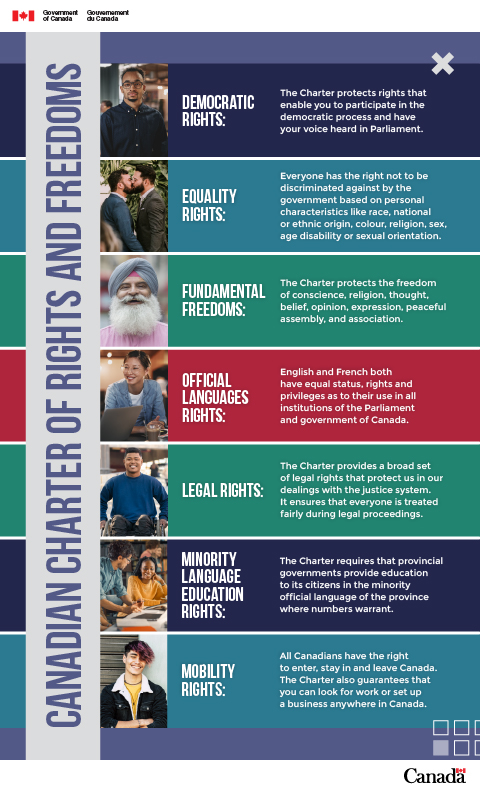
Know your rights!
Learn about the Canadian Charter of Rights and Freedoms on the Government of Canada’s website.
Advertise with Minor Mogul